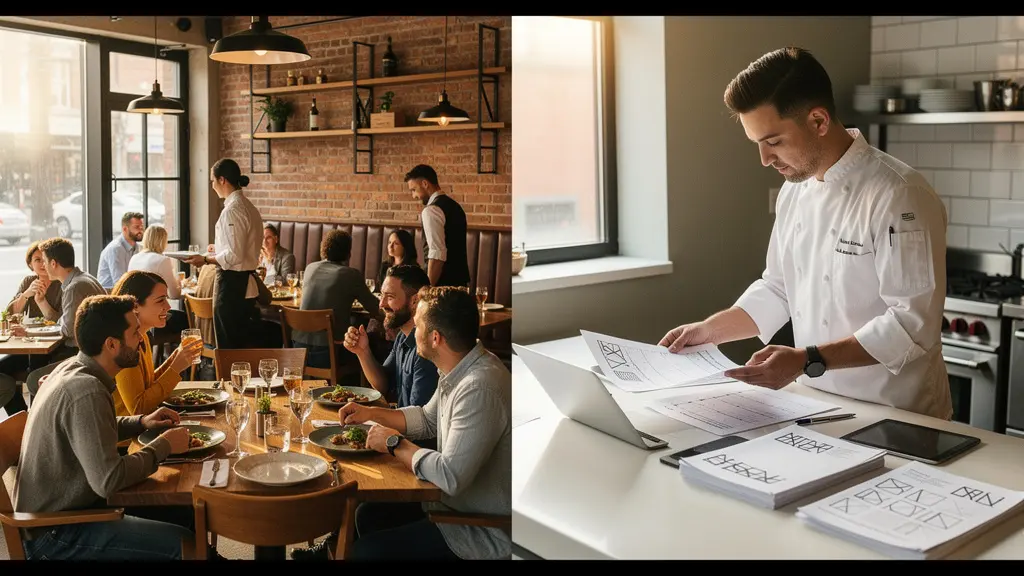
Running a BOGO promo without a rigorous financial framework is a recipe for losing money; the goal is profitable customer acquisition, not just filling seats.
- Success is measured by incremental sales above your historical baseline, not just total revenue.
- Value-add offers, like exclusive items or access, often build more loyalty and protect margins better than straight discounts.
Recommendation: Treat every promotion as a calculated investment, with a clear plan to convert discount-seekers into full-price, loyal patrons through strategic upselling and retention tactics.
The “Buy One, Get One” offer is a classic restaurant marketing dilemma. On one hand, it promises a dining room buzzing with activity. On the other, it sparks a nagging fear in every owner’s mind: am I just giving away my product and destroying my food cost percentage? The common wisdom suggests it’s a necessary evil for “exposure” or a quick fix for a slow Tuesday night. But this approach treats promotion as a gamble, hoping the increased volume somehow makes up for the slashed margins.
The truth is, a successful BOGO isn’t a discount; it’s a calculated investment in customer acquisition. The fundamental mistake most operators make is asking “How many people came in?” instead of “What was the return on my investment for each new customer I acquired?” This shift in perspective changes everything. It moves the focus from sheer volume to measurable profitability, turning a risky giveaway into a strategic weapon for growth. An effective promotion isn’t about how much you give away, but about who you attract and what they do next.
This guide breaks down the systems and strategies needed to run promotions that drive traffic *and* protect your bottom line. We’ll explore how to align offers with your local market’s pulse, use technology to surgically target competitors’ customers, and structure events that build community while generating profit. Most importantly, we’ll establish the financial guardrails to ensure every promotional dollar spent comes back with a positive, measurable return.
To navigate these strategies effectively, this article is structured to guide you from high-level planning to on-the-ground execution. The following summary outlines the key areas we will cover, providing a clear roadmap for building profitable promotions.
Summary: A Strategic Guide to Profitable Restaurant Promotions
- Seasonal Rhythms: How to Plan Promos That Match Your Town’s Specific Events?
- Geo-Fencing Competitors: How to Target Ads to People Leaving Your Rival’s Store?
- Fundraiser Nights: How to Structure a Spirit Night That Actually Makes Money?
- Baseline Sales: How to Know if the Promo Worked or if It Was Just a Busy Week?
- The Upsell Script: Converting a Discount Customer into a Full-Ticket Sale
- Discounts vs. Value Adds: Which Strategy Builds Real Loyalty Without Killing Margin?
- How to Convert National Super Bowl Ads into Foot Traffic for Your Specific Unit?
- How to Become the “Mayor” of Your Trade Area and Make Competition Irrelevant?
Seasonal Rhythms: How to Plan Promos That Match Your Town’s Specific Events?
Effective promotions don’t exist in a vacuum; they tap into the existing energy of your community. Instead of randomly launching a discount, the smartest operators align their marketing calendar with the local rhythm of life: sports championships, town festivals, back-to-school nights, and holiday seasons. The goal is to become the default choice for these occasions. This requires proactive planning, not reactive discounting. For example, customers are already primed to spend during holidays; recent data shows that 27% of diners are willing to spend up to 49% more on these special meals, making it a perfect time for a premium prix-fixe menu rather than a BOGO.
Consider the full spectrum of local happenings. Is there a major marathon finishing downtown? A “recovery meal” deal offered 24 hours later can capture exhausted participants. Is the local high school celebrating graduation? A family package can make you the go-to spot for post-ceremony dinners. This level of strategic thinking turns your restaurant into an integral part of the community’s fabric.
Case Study: Portland Restaurant’s Valentine’s Preview
A Portland restaurant executed this perfectly by thinking ahead. In early January, they invited eight local food influencers to a free preview of their Valentine’s Day menu. This zero-cost meal investment generated 31 social media posts, reaching over 280,000 impressions. The result was 47 reservations directly attributed to the campaign via unique promo codes, filling their books weeks in advance.
By mapping out a year-long promotional calendar based on local events, you can create highly relevant offers that feel less like a desperate plea for business and more like a thoughtful contribution to the community’s experience. This strategic foresight is the first step in moving away from margin-killing discounts.
The following table illustrates how different event types can be paired with specific, targeted promotion strategies to maximize impact and relevance throughout the year.
| Event Type | Promotion Strategy | Timing | Expected Impact |
|---|---|---|---|
| Sports Events | Game night specials, drink combos | During live games | Drive bar sales, new audience |
| Local Festivals | Recovery meal deals | 24-48 hours after event | Capture exhausted participants |
| School Events | Family packages | Evening of event days | Target parent audience |
| Holiday Seasons | Prix-fixe menus, themed items | 2 weeks before holiday | Increase reservations |
Geo-Fencing Competitors: How to Target Ads to People Leaving Your Rival’s Store?
Why market to the entire city when you can target your competitor’s unhappy customers? This is the power of geofencing, a location-based marketing tactic that allows you to create a virtual perimeter around a specific physical location—like a rival restaurant. When a potential customer with a smartphone enters or, more importantly, *leaves* this area, they can be served your targeted ad. It’s a surgical approach to customer acquisition that focuses your marketing spend with incredible precision. The potential is significant, as geofencing campaigns can increase foot traffic by up to 25% and boost conversion rates by 20%.
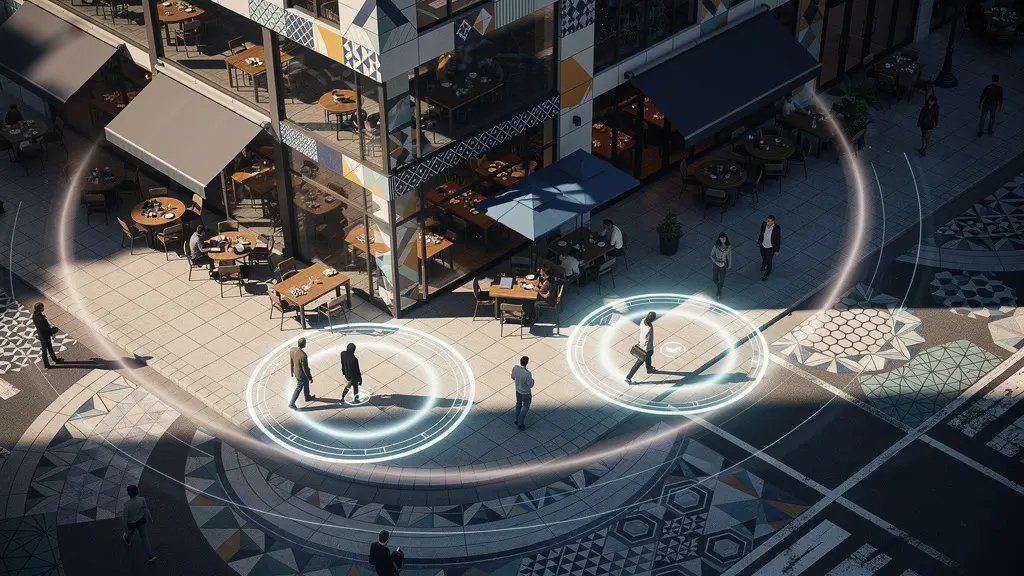
The strategy here isn’t just about poaching; it’s about smart timing. You can set up ads to trigger immediately, catching someone who may have been disappointed with their meal. Or, as one savvy pizzeria did, you can implement a strategic delay. By waiting a week or two to serve the ad, you catch them the *next* time they’re craving that type of food, planting your brand as a superior alternative in their mind.
Case Study: Greek’s Pizzeria Competitor Conquesting
When faced with new competition, Greek’s Pizzeria didn’t just print more flyers. They placed a geofence around a dozen competitors in a three-mile radius. Crucially, they delayed their ads by two weeks to re-engage customers at the point of their next craving. In the first month alone, this strategy drove 269 new visits from people who had seen an ad, with most visits occurring within five days of the ad impression. This is a masterclass in turning a competitor’s traffic into your own revenue.
This tactic transforms your marketing from a wide-net broadcast into a sniper’s rifle. It allows you to directly engage with the most qualified audience possible: people who are already in the market for what you sell, located right in your trade area. Instead of a generic BOGO, you can serve them a compelling “Try a better [your dish type]” offer that speaks directly to their recent experience.
Fundraiser Nights: How to Structure a Spirit Night That Actually Makes Money?
Community fundraiser nights, or “spirit nights,” are often seen as a pure marketing expense—a way to build goodwill at the cost of a day’s profit. But when structured correctly, they can be a powerful engine for both community engagement and financial growth. A well-run event can be a significant revenue driver, with some experienced fundraising managers reporting earnings of $250 to $1,000 in a single night. The key is to move beyond simply writing a check for a percentage of total sales.
A profitable fundraiser is built on protecting your baseline revenue. Instead of donating a percentage of all sales, a smarter structure is to donate a percentage (often a higher one, like 20-25%) only on the incremental sales generated above your historical average for that specific day of the week. This ensures your base business is protected, and the donation is directly tied to the new traffic the organization brings in. This model incentivizes the partner organization to promote the event heavily, as their earnings depend on driving business beyond your normal levels.
Furthermore, the ROI of a fundraiser isn’t just the immediate revenue. It’s a prime opportunity for new customer acquisition. Many attendees will be visiting for the first time. Tracking the long-term value of these new guests—through bounce-back offers or by capturing emails for your newsletter—is essential. You should also consider the value of in-kind donations for raffles, like gift cards or catering packages, which have a high perceived value for the winner but a lower hard cost for you.
Action Plan: Designing a Profitable Fundraiser Night
- Profitability Model: Calculate the event’s profitability using a flow-through P&L approach, not just subtracting the donation from your unit-level EBITDA.
- Focus on Incremental Sales: The primary goal is generating sales above your historical baseline for that day. Track this as your key success metric.
- Protect Your Baseline: Structure the donation as a percentage applied *only* to sales above your daily average to safeguard your core revenue.
- Track Residual Value: Monitor the long-term impact, such as increased guest frequency from new customers and potential catering leads generated from the event.
- Leverage In-Kind Donations: Offer gift cards or catering packages for raffles or auctions. These have a high perceived value to the recipient at a lower actual cost to your business.
Baseline Sales: How to Know if the Promo Worked or if It Was Just a Busy Week?
The single biggest failure in restaurant promotion is not measuring success correctly. Seeing a sales lift on the day of a BOGO offer means nothing if you can’t prove the promotion caused it. Was it the discount, or was it just a surprisingly busy Tuesday? Without a clear sales baseline, you’re flying blind. A proper baseline is not just last week’s sales; it should be a 4-week rolling average for the same day of the week. This smooths out anomalies and gives you a much more accurate benchmark to measure against.

True measurement goes beyond total sales. You must analyze the item-level sales mix to identify cannibalization. Did your BOGO burger deal just cause regular customers, who would have bought your high-margin steak, to trade down? If so, the promo may have actually cost you profit, even if total revenue was up. Similarly, you need to track the Per-Person Average (PPA). A successful promo should attract new traffic without significantly dragging down your average check size, thanks to effective upselling.
The gold standard for attribution is using unique coupon codes or a modern POS system that can tag promotional orders. This allows you to definitively separate sales generated by the promotion from your regular organic traffic. For more advanced analysis, you can even implement control group testing, offering slightly different codes (e.g., BOGO vs. 20% off) to different segments of your email list to see which performs better. Without this data-driven approach, you’re simply guessing, and guessing is a terrible way to manage your margins.
This rigorous analysis is the only way to know if your promotional efforts are a profitable investment or a costly mistake. It provides the clarity needed to refine your strategy, cut losing campaigns, and double down on what works.
The Upsell Script: Converting a Discount Customer into a Full-Ticket Sale
A BOGO promotion successfully gets a customer in the door. The mission is far from over; in fact, the most critical part has just begun. The goal is to convert this discount-seeker into a full-ticket customer. This doesn’t happen by accident. It happens with a well-trained staff and a strategic upselling system. The generic, half-hearted “Anything else?” at the end of an order is a massive missed opportunity. Your team needs to be equipped with specific, enticing suggestions.
Instead of open-ended questions, train your staff on the “perfect pairing” script. When a customer orders the BOGO burgers, the response should be, “An excellent choice. Our craft beer on tap is the perfect pairing for that. Can I get you one?” This is about making specific, complementary suggestions for high-margin items like drinks, appetizers, and desserts. Furthermore, over 70% of customers say they are more likely to visit a restaurant with personalized promotions, and a well-timed upsell can feel like a personalized recommendation.
The upsell doesn’t even have to be for the current visit. The “next visit” upsell is a powerful tool for building loyalty. When a BOGO customer is paying their check, have your staff hand them a “bounce-back” card—not for another discount, but for a value-add on their next *full-price* visit, like a free dessert or appetizer. This bridges the gap from a one-time deal to a repeat habit. You can also offer take-home items during the current visit, like a bottle of your signature sauce or a dessert for tomorrow. To make this stick, create staff incentive programs with small bonuses for the highest upsell percentage on BOGO orders, turning a cost center into a team-wide game of profit generation.
By scripting these interactions, you transform the BOGO customer experience from a simple transaction into the first step of a profitable relationship.
Discounts vs. Value Adds: Which Strategy Builds Real Loyalty Without Killing Margin?
The constant pressure to drive traffic often pushes restaurants toward the simplest tool: the percentage discount. While a “20% Off” or “BOGO” offer can create a short-term spike in traffic, it also trains customers to wait for deals and devalues your brand over time. A more sustainable and profitable strategy often lies in value-added promotions. A value-add gives the customer *more* for their money, rather than simply charging them *less*. This psychological shift is critical: a discount feels transactional, while a value-add feels like a gift or an exclusive reward.
Value-adds can take many forms. It could be a free, high-margin item (like a special dessert or signature side dish) with the purchase of two entrees. It could be access to an exclusive experience, like a “chef’s table” tasting or early access to a new menu item. These offers build a relationship and create a memorable experience, which are the true foundations of loyalty. Most importantly, many value-adds have a high perceived value to the customer but a low actual food cost for the restaurant, protecting your margins far more effectively than a straight percentage discount.
Case Study: Milwaukee Restaurant’s Patio Season Pass
A Milwaukee restaurant brilliantly executed a value-add strategy by creating a “Patio Season Pass.” Customers paid $100 upfront at the beginning of spring. In return, they received eight $15 dining credits to be used on the patio between May and September. The restaurant sold 240 passes, generating $24,000 in immediate cash flow before the season even began. Customers perceived a $120 value for their $100, while the restaurant guaranteed repeat summer visits and benefited from the inevitable extra spending beyond the $15 credit on each visit.
This approach moves the conversation from price to experience. It attracts a better-quality customer—one who is interested in what makes your restaurant special, not just what’s on sale. By focusing on adding value, you build a brand that people want to be a part of, not just one they’ll visit when they have a coupon.
The table below breaks down the fundamental differences in impact between these two core promotional strategies, highlighting how they affect customer perception, profit margins, and long-term loyalty.
| Strategy Type | Customer Perception | Margin Impact | Loyalty Effect |
|---|---|---|---|
| Percentage Discount | Transaction-focused | Direct reduction | Attracts deal-seekers |
| Free Item Value-Add | Gift/reward feeling | Uses sunk costs | Builds relationships |
| Experience Add-On | Exclusive access | Near-zero cost | Creates memories |
| Discovery Samples | Introduction opportunity | Minimal food cost | Drives future sales |
How to Convert National Super Bowl Ads into Foot Traffic for Your Specific Unit?
Major national events like the Super Bowl create a massive wave of consumer attention, fueled by millions of dollars in advertising from national chains. As an independent operator, you can’t compete with that budget, but you can “draft” off their momentum. While big brands are spending fortunes to get people thinking about wings and pizza, you can capture that local demand with a smarter, more targeted offer. The key is to zig when they zag: instead of competing on price, compete on experience.
The national conversation creates the “why”; your job is to provide the “where.” People are already planning to gather and eat. Your task is to position your restaurant as the best local option. This is the perfect time to roll out a premium “Game Day Platter” or a “Super Bowl Party Pack” for takeout. These are value-added bundles, not discounts. They offer convenience and quality that a national chain can’t match. Research backs this up, showing that 61% of diners are prepared to spend extra for a unique special event menu. They are primed to celebrate, not to pinch pennies.
Use your local marketing channels—social media, email lists, and in-store signage—to promote your unique offering in the weeks leading up to the event. Highlight what makes your offer better: higher quality ingredients, unique house-made sauces, or creative menu items. You’re not just selling food; you’re selling a better experience. While the national ads build the category demand, your targeted local marketing ensures that when customers decide to buy, they think of you first.
This strategy allows you to leverage a multi-million dollar advertising blitz for free, converting nationwide hype into tangible foot traffic and sales for your specific location, all while maintaining healthy margins.
Key Takeaways
- Always measure promotions against a historical sales baseline (e.g., a 4-week rolling average) to isolate the promo’s true impact from organic business.
- Value-add strategies, such as offering an exclusive item or a unique experience, typically build stronger customer loyalty and protect profit margins more effectively than simple percentage discounts.
- The primary goal of a discount is customer acquisition; a successful promo must be paired with a clear upsell and retention plan to achieve a positive long-term ROI.
How to Become the “Mayor” of Your Trade Area and Make Competition Irrelevant?
Ultimately, the most powerful way to run a profitable business is to make the competition irrelevant. This isn’t achieved through one-off BOGO deals or clever discounts. It’s achieved by becoming the undisputed “mayor” of your trade area—the go-to institution that is deeply embedded in the community’s life. This status is built through a combination of consistent quality, a unique brand personality, and proactive community engagement. It’s about creating a place that people are loyal to beyond the menu.
Becoming the “mayor” means creating signature experiences that can’t be replicated. This could be a unique, crave-able menu item that becomes your calling card. One Texas BBQ joint, for example, introduced ‘Bourbon Pumpkin Glazed Ribs’ as a seasonal special and relentlessly promoted it. They sold 40% more rib plates during the promotion compared to their baseline, creating a destination item that people talked about and waited for all year. It’s also about hosting events that build your brand. As the National Restaurant Association points out, the appetite for this is huge.
7 in 10 adults—including most consumers across all age groups—say they’d likely participate in tasting events at a restaurant.
– National Restaurant Association, Local Restaurant Marketing Strategies Report
Imagine hosting a “Meet the Brewer” night, a seasonal menu tasting, or a cooking class. These events generate revenue, but more importantly, they forge a deep connection with your guests. They create memories and stories that people share. When you are the host of the community’s best experiences, a competitor’s 10% off coupon becomes meaningless. You’re no longer competing on price; you’re operating on a completely different level.
Stop treating promotions as a cost center and start building your playbook of profitable, data-driven campaigns. By applying these financial controls and strategic marketing tactics, you can turn every offer into an investment that builds your brand, fosters loyalty, and transforms your restaurant into a beloved local institution. The first step is to analyze your baseline—do it this week.