
Success as a franchisee isn’t about following rules blindly or breaking them; it’s about mastering the system from within to outperform the network.
- Top performers don’t just execute Standard Operating Procedures (SOPs), they understand and apply their underlying intent.
- They treat the operations manual not as a cage, but as a set of performance guardrails that enable structured, intelligent innovation at the local level.
Recommendation: Shift your focus from ‘compliance vs. freedom’ to ‘disciplined intrapreneurship’ to unlock your unit’s true performance potential.
You bought a franchise to be your own boss, to channel your entrepreneurial drive into a proven system. Yet, you find yourself caught in a daily tug-of-war: the corporate playbook in one hand, your gut instincts in the other. The common advice is simple: “Just follow the system.” But you see local opportunities the head office can’t, and you know that blind compliance can feel like a straitjacket, stifling the very spirit that makes a business thrive.
This conflict is the single greatest challenge for ambitious franchisees. It’s the friction between the brand’s need for consistency and your drive to adapt, innovate, and lead. Many believe the only options are to conform and become a robot manager or to rebel and risk breaching your agreement. This is a false choice. The most successful franchisees—the top 1% who consistently lead the performance charts—don’t choose one or the other. They master both.
The key isn’t to lose your entrepreneurial soul, but to channel it through a new framework: Disciplined Intrapreneurship. It’s about understanding the *intent* behind every corporate SOP and using that knowledge as a guardrail for smart, localized execution. It’s about transforming the 300-page manual from a list of rules into a strategic weapon.
This guide will not tell you to simply “follow the rules.” Instead, it will coach you on how to think like a top-performing franchisee. We will deconstruct the habits, mindsets, and strategies that allow you to honor the corporate strategy while unleashing your leadership to drive exceptional unit-level performance.
This article provides a complete roadmap for mastering the role of a high-performance franchisee. Explore the sections below to learn the specific habits, mindset shifts, and strategies needed to turn corporate systems into your greatest asset.
Summary: How to Execute Corporate Strategy Without Losing Your Entrepreneurial Soul?
- The 5 Morning Routines of Top 1% Franchisees in the Network
- How to Adapt Rigorous SOPs When Real-World Chaos Strikes?
- Field Consultants: How to Use Them as Partners Instead of Policemen?
- The “I Know Better” Syndrome That Destroys Net Margins in Year 2
- How to Delegate Admin Work to Focus on the 20% of Tasks That Drive Sales?
- Why 60% of Corporate Managers Struggle During Their First Year of Franchising?
- Shadowing Checklist: How to Ensure Trainees Watch the Right Behaviors?
- How to Transform a 300-Page Operations Manual Into Actionable Staff Habits?
The 5 Morning Routines of Top 1% Franchisees in the Network
Excellence is not an accident; it’s a discipline. The highest-performing franchisees don’t start their day by reacting to fires. They architect their mornings to be proactive, strategic, and focused on what truly moves the needle. While others are lost in the whirlwind of emails and minor operational hiccups, the top 1% are already executing a plan. Their morning isn’t about working harder; it’s about working smarter, aligning their energy with the core drivers of profitability and growth before the doors even open.
This disciplined start sets the tone for the entire day. It’s a conscious shift from being a reactive manager to a proactive leader. By dedicating the first part of their day to high-leverage activities, they ensure that the business runs them less, and they run the business more. This isn’t about rigid, unthinking schedules, but about creating a consistent framework for success.
Your Action Plan: The High-Performance Franchisee’s Morning Framework
- Start with KPI Review: Before checking a single email, analyze your 3 most critical unit-level metrics from the previous day (e.g., sales, labor cost, average ticket). This immediately shifts your brain from reactive to proactive management.
- Dedicate 25-Minute Innovation Blocks: Review one corporate SOP for 25 minutes, then spend the next 25 minutes brainstorming how to execute it with local innovations or improvements. This marries compliance with creativity.
- Conduct a 15-Minute “Gemba Walk”: Get on the floor with your opening crew. Observe, ask questions, and listen. This is where you capture priceless frontline insights before the daily operational rush begins.
- Practice Mindset Priming: Spend 10 minutes reading or listening to content on intrapreneurship, leadership, or challenges specific to the franchise world. This primes your mindset for growth, not just maintenance.
- Document and Communicate One Key Decision: Use a decision journal to separate emotional reactions from data-driven insights. Write down one key decision for the day and the ‘why’ behind it, then communicate it to your team leader.
By internalizing these habits, you move beyond simply managing a location. You begin to lead it with the precision and foresight that defines the best in the network. It’s the first, most critical step in channeling your entrepreneurial energy effectively within the franchise system.
How to Adapt Rigorous SOPs When Real-World Chaos Strikes?
Your morning routine sets the strategy, but then reality hits. A key supplier is late, a machine breaks down, or an unexpected customer surge overwhelms your staff. In these moments, rigid adherence to a Standard Operating Procedure (SOP) can feel counterproductive or even impossible. This is where the difference between a good franchisee and a great one becomes crystal clear. A good franchisee knows the rules; a great franchisee understands the intent behind the rules.
Chaos is a test of your ability to be a disciplined intrapreneur. Instead of throwing the manual out the window, you must learn to see it as a set of principles, not just procedures. For instance, McDonald’s didn’t abandon its core principles of speed and consistency when it pivoted to compete with coffee shops; it adapted its operations to deliver on those same principles in a new market segment. This evolution is a masterclass in adapting SOPs while honoring brand standards.
The key is to ask “Why?” Why does this rule exist? Is it for safety, quality, customer experience, or legal compliance? Once you understand the core principle, you can make intelligent, defensible adaptations in a crisis. This framework allows you to solve real-world problems without compromising the fundamental promises of the brand.
| Situation | Core Principle | Standard Procedure | Acceptable Adaptation |
|---|---|---|---|
| Supply Chain Disruption | Maintain product quality | Use specific supplier only | Source from pre-approved alternative with documentation |
| Key Employee No-Show | Ensure customer service level | Follow exact staffing chart | Cross-train and redeploy team members |
| Unexpected Customer Surge | Deliver consistent experience | Standard service timeline | Implement express service model with communication |
Using this mindset, you transform from a rule-follower into a problem-solver. You are no longer a victim of circumstance but a leader who navigates chaos with purpose, maintaining both operational integrity and business momentum.
Field Consultants: How to Use Them as Partners Instead of Policemen?
For many franchisees, an upcoming visit from the corporate field consultant can trigger anxiety. The visit is often perceived as an audit—a search for infractions, a critique of operations, a “gotcha” moment. This adversarial mindset, seeing the consultant as a policeman, is one of the most significant barriers to growth. Top-performing franchisees flip this dynamic on its head. They don’t see a policeman; they see a free, high-level performance coach.
Your field consultant has a unique and valuable perspective. They see dozens of other franchises in the network, witnessing firsthand what works and what doesn’t. They have access to system-wide data and best practices that you, focused on your single unit, will never see. Treating them as an adversary is like refusing to listen to your team’s most experienced coach. Instead, prepare for their visit as a strategic opportunity.
Before they arrive, prepare a list of your biggest challenges and opportunities. Show them your KPIs and ask for their interpretation based on what they see elsewhere. Discuss the “acceptable adaptations” you’ve made and get their feedback. This collaborative approach transforms the conversation from a one-way critique into a two-way strategic partnership.

By proactively sharing your data and challenges, you demonstrate your commitment to performance and turn the consultant into a vested partner in your success. They become a vital resource for benchmarking your performance, troubleshooting problems, and identifying growth opportunities you might have missed. This shift in perspective is a powerful lever for accelerating your unit’s performance.
The “I Know Better” Syndrome That Destroys Net Margins in Year 2
After a successful first year, a dangerous form of confidence can set in. You’ve learned the ropes, your unit is profitable, and you start to think, “I’ve got this. I know my local market better than corporate.” This is the “I Know Better” Syndrome, and it’s a quiet killer of net margins. It’s the moment your entrepreneurial soul, unchecked by discipline, begins to dismantle the very system that created your initial success.
It starts small: a tweak to a core recipe, a deviation from a proven marketing campaign, or ignoring a data-tracking SOP because it feels like busywork. You justify it as “local customization,” but in reality, you are slowly eroding the operational and economic model you paid for. The franchise system is designed for scalability and efficiency. Every component, from supply chain pricing to marketing messaging, is optimized based on data from hundreds or thousands of units. When you go rogue, you disconnect from that collective intelligence. While your intentions may be good, you are making isolated bets against a proven model. The data is clear: only about 4% of franchises fail within the first five years, a testament to the power of a proven system.
Case Study: Structured Innovation at Google
The antidote to the “I Know Better” Syndrome isn’t to kill innovation, but to structure it. Google’s famous ’20 percent time’ policy is a perfect example of disciplined intrapreneurship. It allowed employees to spend a portion of their time on projects outside their core job description, but within the company’s ecosystem and goals. This structured freedom led to breakthroughs like Gmail and AdSense. For a franchisee, this translates to dedicating specific, limited time to test local ideas while executing the core model with 100% fidelity the rest of the time. You test, you measure, and if it works, you present the data to your field consultant—you don’t unilaterally change the system.
The cure for this syndrome is humility and data. Acknowledge that the system is your strongest asset. Channel your entrepreneurial energy into executing the system better than anyone else and innovating within the guardrails, not by tearing them down.
How to Delegate Admin Work to Focus on the 20% of Tasks That Drive Sales?
The “I Know Better” Syndrome is a mindset problem, but it’s often fueled by a practical one: a lack of time. As a franchisee, you’re buried in administrative tasks—scheduling, inventory, payroll, reporting. This operational quicksand pulls you away from the 20% of activities that generate 80% of your results: leading your team, engaging with customers, and strategic local marketing. You can’t be a disciplined intrapreneur if you’re stuck being a full-time administrator.
Delegation isn’t a luxury; it’s a survival tactic. The first step is to conduct a ruthless task audit. For one week, document everything you do and categorize it into two columns: ‘Operator’ tasks (things that can be systemized, documented in a checklist, or automated) and ‘Owner’ tasks (strategy, culture-building, high-level problem-solving, B2B networking). Your goal is to systematically eliminate, automate, or delegate everything in the ‘Operator’ column.
Appoint an ‘Admin Champion’ from your team—a high-potential employee who can take ownership of these recurring tasks. This not only frees you up but also serves as a powerful leadership development opportunity for them. Create simple, 5-step checklists for recurring processes. Use technology to build dashboards that give you the data you need at a glance, rather than spending hours digging for it. Remember to set clear, written goals for this delegation process. As research confirms, people who write their goals down are 42% more likely to achieve them. This applies to your delegation targets as much as your sales targets.
By freeing yourself from the administrative vortex, you create the mental and physical space to focus on the high-impact ‘Owner’ work. This is where your entrepreneurial spirit truly shines—not in filling out forms, but in leading people and growing your business.
Why 60% of Corporate Managers Struggle During Their First Year of Franchising?
It seems like a perfect match: a seasoned corporate manager, skilled in strategy and team leadership, takes the helm of a franchise. Yet, the transition is often brutal. The reason is a fundamental shift in the nature of work. In a corporate structure, you manage people who manage tasks. As a new franchisee, you are often the one doing the tasks, at least initially. This is a shock to the system for many.
This reality is especially common, as studies show that approximately 58% of entrepreneurs move into business ownership from corporate careers, seeking more autonomy. However, they trade the comfort of a support structure—HR, IT, finance departments—for the raw, hands-on reality of running a small business. The polished boardroom is replaced by a stockroom with a leaking pipe, and strategic planning sessions are replaced by the need to personally cover a shift for a sick employee.
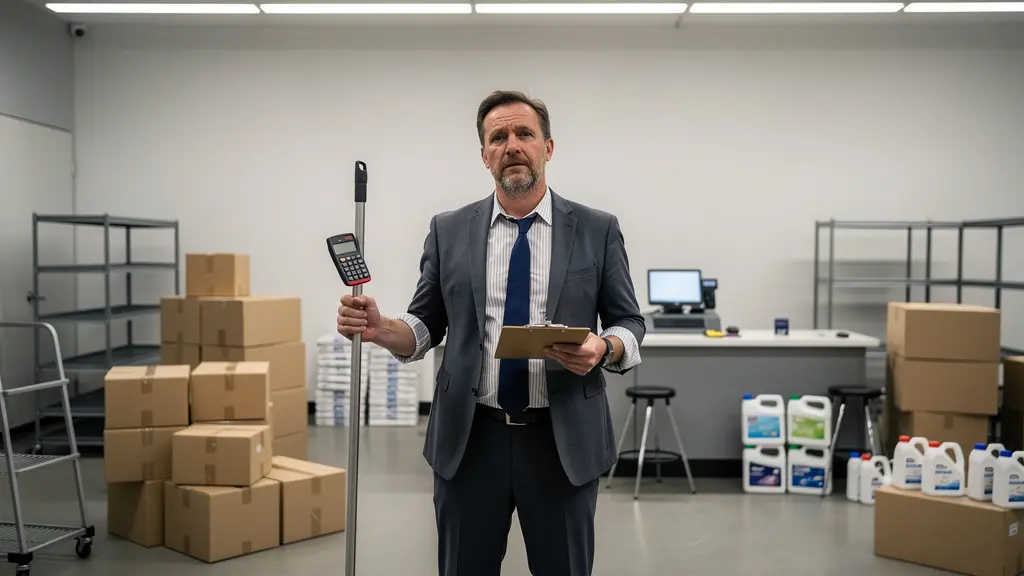
The struggle isn’t a lack of skill, but a misapplication of it. Your corporate experience is invaluable, but it must be adapted. Your strategic thinking is crucial, but it must now be applied to daily, ground-level problems. As the experts at the Growth Institute note, this is a natural part of the journey:
As your business grows, you and your leadership team will face more challenges brought on by the complexity of that growth. You’ll need to rethink processes – or create them for the first time.
– Growth Institute, How to Develop an Entrepreneurial Mindset to Become a Better Leader
The successful transition happens when a manager accepts this new reality. They embrace the hands-on work as a necessary phase to deeply understand the business from the ground up. They use their strategic mind not to delegate from a distance, but to build the very systems and train the very people that will eventually allow them to step back and lead from a more strategic position again.
Key Takeaways
- Adopt a “Disciplined Intrapreneur” mindset, focusing on executing the intent of SOPs, not just the letter.
- Reframe corporate constraints like operations manuals and field consultants as performance guardrails and strategic partners.
- Aggressively delegate administrative tasks to free up your time for the 20% of “Owner” activities that truly drive growth and profitability.
Shadowing Checklist: How to Ensure Trainees Watch the Right Behaviors?
Your ability to lead as a disciplined intrapreneur is limited if you can’t replicate that mindset in your team. The most common training method—having a new hire “shadow” a veteran employee—is often incredibly ineffective. The trainee watches passively, picking up a mix of good and bad habits, with no clear learning objectives. To scale excellence, you must transform passive shadowing into an active, mission-oriented learning experience.
Instead of telling a trainee to “go watch Jane for an hour,” you must give them a specific mission. Their job isn’t just to watch, but to observe and document with a purpose. This approach, proven by successful training programs like those at Merry Maids which boast over 40 years of success, turns observation into an active hunt for best practices. It requires the trainee to engage their critical thinking and identify the specific techniques that drive results.
This structured approach ensures that new hires aren’t just learning the ‘what’ of the job, but the ‘how’ and ‘why’ of high performance. It teaches them to see the business through your eyes: a system of interconnected behaviors and outcomes. The following table illustrates how to structure these active shadowing missions.
| Shadowing Type | Traditional Approach | Active Mission Approach | Learning Outcome |
|---|---|---|---|
| Hour 1 | Watch general operations | Document every customer problem and solution | Problem-solving patterns |
| Hour 2 | Observe service delivery | Tally upselling instances and language used | Sales technique mastery |
| Hour 3 | Follow manager activities | Note system vs. reality adaptations | Critical thinking skills |
| Hour 4 | Watch peer performance | Identify efficiency techniques at every level | Best practice adoption |
By implementing this active shadowing framework, you stop cloning employee habits and start cultivating a team of observant, thinking problem-solvers. You are teaching them the foundational skills of disciplined intrapreneurship from day one.
How to Transform a 300-Page Operations Manual Into Actionable Staff Habits?
The ultimate symbol of corporate rigidity is the 300-page operations manual. For most employees, it’s an intimidating, unread binder that collects dust on a shelf. For a top-performing franchisee, it’s a goldmine of proven processes waiting to be unlocked. The challenge isn’t the content of the manual, but its format. Your final mission as a disciplined intrapreneur is to translate that dense document into living, breathing habits on your team.
The secret is to distill, not dilute. No employee will internalize 20 pages on a single process. Your job is to extract the core principles and critical steps and re-package them into simple, visual, one-page guides. These guides, featuring more photos and diagrams than text, should be posted directly at the relevant workstations. The goal is real-time access to the right information at the right moment.
Focus on identifying one or two “keystone habits”—small actions that trigger a cascade of other positive behaviors. For example, a keystone habit of double-checking every order before it goes out not only reduces errors but also reinforces a culture of quality and attention to detail. Reinforce these habits not with lectures, but with “Teach-Back” certifications, where employees must explain the ‘why’ behind a process to their peers. Gamify compliance with leaderboards and public recognition for teams or individuals who consistently execute to standard. The goal is to make excellence visible and celebrated.
By atomizing the manual into digestible, actionable micro-habits, you make compliance easy and intuitive. You’re not just enforcing rules; you’re building a culture of operational excellence. This is the ultimate expression of mastering the system, a skill that is driving the franchise industry to a projected size of more than 821,000 establishments in 2024.
Your franchise agreement is a license to operate a business, but your entrepreneurial soul is your license to lead it. By embracing the role of a disciplined intrapreneur, you can honor the system that provides your foundation while unleashing the leadership that will build your legacy. Start today by choosing one principle from this guide and committing to its execution.